
Eating disorder therapy and support in Vaughan
Support for the feelings underneath.
Your relationship with food and your body can carry a lot of pain. Our Registered Psychotherapists support the emotional side of that struggle, alongside your doctor and dietitian, so you don’t have to face it alone. In Vaughan and online across Ontario.
If you’re worried about your child or teen, start with your family doctor for the physical side. Our child and youth therapists can support the feelings underneath, alongside that care.
Takes 2 minutes. No credit card. No referral needed.
- 24+ Registered PsychotherapistsLook any of us up on the CRPO register
- Direct billing availableSun Life, Beneva, Green Shield
- Evenings and weekendsIn person or online



It’s about much more than it seems.
Struggles with eating and body image are rarely about one thing. So often they’re about control when life feels uncertain, anxiety that needs somewhere to go, perfectionism that never lets up, and a sense of self-worth that has taken a beating. The body becomes the place where all of that pain plays out.
You don’t have to be in crisis, or ‘sick enough’, to deserve support. If your relationship with food or your body is taking up space in your head and quietly wearing you down, that’s reason enough to reach out.
We support the emotional and psychological side of eating and body image: the anxiety, control, perfectionism, shame and self-worth underneath. It’s gentle, evidence-based talk therapy that works alongside your medical care, not instead of it.
- A compassionate, non-judgmental space
- Focused on the feelings behind it
- Alongside your doctor and dietitian, online or in person
What has it been like for you lately?
Tap anything that sounds familiar. None of these means something is wrong with you, and you don’t have to meet any threshold to deserve support.
Your body comes first.
If you’re feeling faint or unwell, or have chest pain, please get medical help right away rather than waiting for a therapy appointment. For support and information, the National Eating Disorder Information Centre (NEDIC) has a free helpline.
NEDIC helpline, toll-free1-866-633-4220In an emergency, call 911.
Talk with us when you’re readyStart with what you’re noticing.
Tap what sounds like you lately, and we’ll suggest a gentle next step.
You’ve noticed 1 thing.
That counts, and it deserves care. A free 20-minute consult is a gentle way to talk it through, at your own pace.
You’ve noticed 3 things.
That’s a lot to carry quietly. You don’t need to be in crisis to reach out, and struggling on your own counts.
Not sure it’s ‘bad enough’? You don’t need to meet any threshold. If it’s causing you pain, that counts.
Book a free 20-minute consultThis isn’t a diagnosis.
That critical voice is the struggle talking, not you.
Therapy helps you hear the difference between a harsh inner voice and your own, and answer it with something kinder and truer. Step through a few of the lines people often hear, and what therapy does with them.
- 1The critical voice
“Your worth depends on how you look.”
- 2UnderneathThis is the inner critic, not a fact.When self-worth has taken a beating, appearance can start to feel like the only measure that counts. Therapy looks gently at where that rule came from and what it has been protecting you from.
- 3Your voice
“My worth was never about my appearance.”
- 1The critical voice
“If you lose control, everything falls apart.”
- 2UnderneathControl can feel like safety when life feels uncertain.Holding on tightly is often a way of coping with anxiety, or with things that feel out of your hands. Therapy builds other ways to feel steady, so the grip can loosen safely.
- 3Your voice
“I can loosen my grip and still be safe.”
- 1The critical voice
“Asking for help means you’re weak. Handle it yourself.”
- 2UnderneathShame often keeps this hidden.Keeping it to yourself can make it feel heavier. Reaching out, at whatever pace feels possible, takes real courage, and you stay in charge of what you share.
- 3Your voice
“I deserve support, like anyone would.”
- 1The critical voice
“What does therapy actually do with this voice?”
- 2UnderneathYou learn to notice it, question it, and grow your own.Your therapist helps you spot the harsh voice when it shows up, gently question it, and build a kinder one, while your doctor and dietitian look after your physical health.
- 3Your voice
“I’m allowed to take up space and be cared for.”
An illustration of a common pattern, not a real client’s words. In sessions you learn to notice that voice, gently question it, and grow your own.
Talk it through, free for 20 minutesMeet therapists who support this work
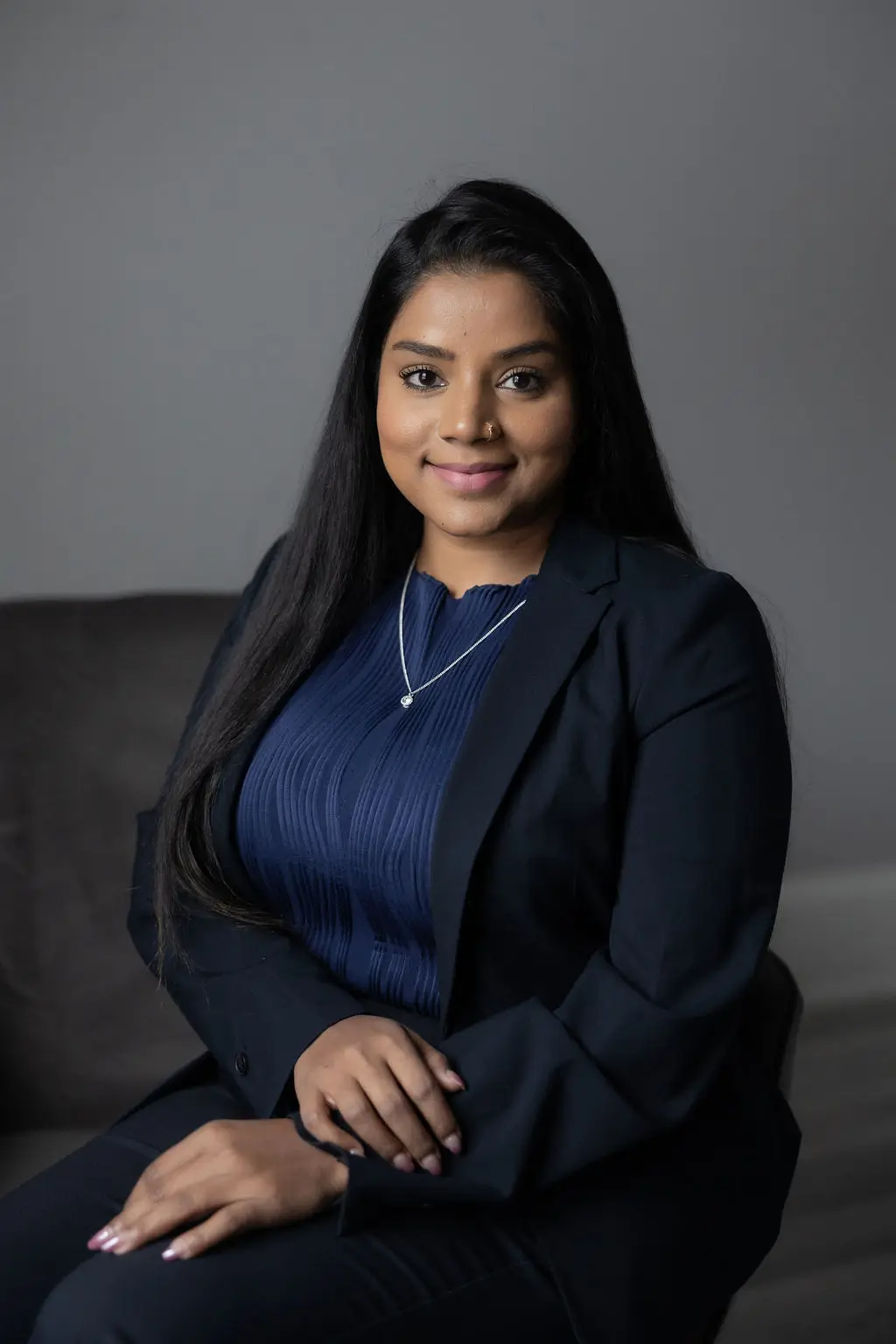
Every therapist below is a Registered Psychotherapist who supports the emotional side of eating and body image with warmth and care. Watch a short intro, read their profile, or let us match you in your free consultation.
 Watch intro
Valeria Matei
Registered PsychotherapistCRPO #14052Woodbridge · Online
Holistic and emotion-focused, Valeria helps with emotion regulation and self-worth.
 Watch intro
Keera Anton
Registered Psychotherapist (Qualifying)CRPO #18896Online only
Keera helps clients understand and navigate difficult emotions at their own pace.
Not sure who fits?
Let us match you in your free consultation. If the fit isn’t right, we’ll help you switch to another therapist on the team.
What your first session actually looks like
We’re glad to be one part of the picture, focused on the feelings, while your doctor and dietitian look after your physical health. Your first appointment is a 70-minute initial assessment, and here’s how it tends to go.
- 1Minutes 0 to 15
A gentle welcome
No judgment. Your therapist welcomes you, explains confidentiality, and makes clear you set the pace and share only what you want to.
- 2Minutes 15 to 60
How you’ve been feeling
A warm, unhurried conversation about what has been hard and what sits underneath. Saying it out loud, safely, often lifts a little of the weight on its own.
- 3Throughout
Joining up your care
If you have a doctor or dietitian, you talk about coordinating with them, only with your consent. If you need medical or specialized care, we help you find it.
- 4The last 10 minutes
A gentle plan
Together you decide what support could look like and where you’d like to begin. No pressure, and you stay in charge of the pace.
Evidence-based support for the emotional side.
There’s no single script. Your therapist draws on approaches with research behind them and tailors them to you and your pace. This is therapeutic support, not medical care, and sessions give you something steady to expect, at a pace you help set.
CBT for anxiety and perfectionism
Notice and gently shift the harsh, all-or-nothing thoughts that pour fuel on the struggle.
More on CBTDBT skills for emotion regulation
Concrete skills to ride intense feelings and tolerate distress without turning them inward.
More on DBTSelf-compassion and body-image work
Soften the inner critic and build a steadier, kinder relationship with yourself and your body.
Trauma-informed therapy
When something painful sits underneath, we work with it carefully, at a pace you control.
PTSD and trauma therapyInnerSight was founded by Svetlana Antonyshyn, RP, on the belief that healing should treat the person, not a label. More about our approach.
What the research says
We’ll always be honest about evidence. Recovery is possible, though it often takes time and a team. Here’s some of what research says about the feelings side of the struggle.
In 2012, about 113,000 people in Canada aged 15 and older were living with an eating disorder diagnosed by a health professional. That count includes only diagnosed cases.
In a US study that followed 228 women with eating disorders for over 20 years, about two thirds had recovered. For some, recovery came only after many years.
Across 96 studies, difficulty noticing, understanding and accepting emotions was strongly linked with eating disorder symptoms, whatever the eating disorder. It’s an association, not proof of cause.
A review of 59 studies found people with more self-compassion tended to have fewer eating and body image concerns, and self-compassion-based interventions helped more than comparison groups.
Our Registered Psychotherapists do not diagnose, prescribe, give meal plans or provide medical monitoring. We work alongside your doctor and dietitian, and if you need medical care or a specialized program, we’ll help you find it.

Clinically reviewed by Svetlana Antonyshyn, Registered Psychotherapist (CRPO #001652). Last reviewed October 2026.
What eating disorder therapy costs
No hidden fees and no pressure. Most private insurance plans cover a portion of psychotherapy fees. We can bill Sun Life, Beneva (formerly SSQ) and Green Shield directly when your plan is with one of them, and we provide receipts for claims with other insurers.
- $0
- Free consultation · 20 minMeet a therapist, ask anything, and see if it feels right. No credit card and no obligation.
- $245
- First appointment · 70 minA longer first conversation to understand what’s going on and set goals together.
- $180
- Ongoing sessions · 55 minEvery session after your first, in person or online.
- $125
- Reduced-fee sessionWith select supervised therapists in training. Reduced-fee couples and family sessions are $175.
Appointments cancelled with less than 48 hours’ notice may be charged a cancellation fee. Sessions aren’t covered by OHIP, but psychotherapy from a Registered Psychotherapist may qualify as a medical expense at tax time. Worried about cost? See our reduced-fee program, or call us. We’re happy to walk you through it.
How far could your benefits go?
Pick your plan’s yearly maximum for a Registered Psychotherapist.
An estimate, not a quote or a promise of coverage. Plans differ on the percentage reimbursed, per-visit limits, deductibles and which providers they recognize, so check your benefits booklet or ask your insurer about “Registered Psychotherapist” and “Registered Psychotherapist (Qualifying).”
Book a free 20-minute consultDon’t take our word for it. Check.
Anyone can say they’re good at this. Here’s what you can verify about us in about two minutes, without speaking to anyone.
Regulated, not self-declared
“Psychotherapist” is a protected title in Ontario. Our team are Registered Psychotherapists, accountable to a College with a public complaints process.
See every therapist’s registrationSupervised every month
Our therapists meet for clinical supervision every month, so the work stays accountable to someone other than the person doing it.
How we workWe show our sources
Where we describe what therapy can help with, we name the source and link it, from Statistics Canada and CAMH to peer-reviewed trials.
What we help withNothing locks you in
No referral needed. No contract, no package to buy. Fees are published up front, $180 for a 55-minute session. If the fit isn’t right, tell us and we’ll help you switch to another therapist on the team.
Fees and coverageEating disorder therapy: your questions, answered
Still wondering about something? Ask us in a free consult, or call (905) 553-9507. Phones are answered weekdays 9 am to 5 pm, Saturdays 9 am to 2 pm.
Do you treat eating disorders?
We support the emotional and psychological side of eating and body image. Our Registered Psychotherapists do not diagnose, prescribe, give meal plans, or provide medical monitoring. We work alongside your doctor and dietitian, and we will help you connect with a specialized program when that level of care is needed.
Do I need a referral for eating disorder support in Vaughan?
No referral is needed. You can book a free 20-minute consultation online at psychotherapyclinic.janeapp.com or call (905) 553-9507. Most people have their first full session within a week.
Can therapy help if I am already seeing a doctor or dietitian?
Yes. We are glad to be part of your team, focused on the feelings, thoughts and pressures behind eating and body image. With your consent, we can coordinate care so everyone supporting you is working together.
What if I am not sure my eating is ‘bad enough’ for help?
You do not need to be in crisis or meet any threshold to deserve support. If your relationship with food or your body is causing you pain, that counts. Struggling quietly is reason enough to reach out.
Is support available online across Ontario?
Yes. We offer secure video sessions anywhere in Ontario, plus in-person sessions in Vaughan, Woodbridge and Barrie. Evenings and weekends are available.
How much does it cost and is it covered?
The first 20-minute consultation is free, and an individual session is $180 for 55 minutes. There is no OHIP coverage, but most private insurance plans cover a portion of services from a Registered Psychotherapist. We bill Sun Life, Beneva (formerly SSQ) and Green Shield directly, and reduced-fee sessions are available.
What approaches do you use?
Evidence-based, emotion-focused work: CBT for anxiety and perfectionism, DBT skills for emotion regulation, self-compassion and body-image work, and trauma-informed therapy. We do not provide meal plans or medical care; we support the emotional side alongside your care team.
What happens in the first session?
A gentle conversation about how you are feeling. There is no weighing, no food rules and no pressure. Together you decide what support could look like and where you would like to begin.
How is this different from a nutrition or meal-plan program?
We focus on the thoughts, feelings and pressures underneath eating and body image, like anxiety, perfectionism and self-worth. We do not provide meal plans, weigh clients, or offer medical monitoring. When that kind of care is needed, we help you connect with a dietitian, physician or specialized program alongside our work together.
How do I know if this is an eating struggle or just a normal focus on diet or fitness?
A general interest in food or fitness is not the same as a struggle that is taking up a lot of emotional space, causing distress, or affecting how you feel about yourself day to day. A Registered Psychotherapist does not diagnose, but if your relationship with food or your body feels heavier than that, it is worth talking to someone, and we are glad to help you figure out the right next step.
Eating disorder therapy near you
In-person sessions in Woodbridge, Maple and Barrie, plus secure video sessions anywhere in Ontario. Evenings and weekends available.
Online across Ontario
Secure video sessions from anywhere in the province, from somewhere you feel comfortable.
Book an online consultAppointment hoursMonday to Friday, 9:30 am to 8:00 pmSaturday, 9:30 am to 5:30 pm

You deserve support, and a gentler way through.
However quietly you’ve been carrying this, it counts, and it deserves care. The first step is a free, no-pressure conversation, whenever you feel ready.
Phones answered Monday to Friday 9 am to 5 pm, Saturday 9 am to 2 pm.
