
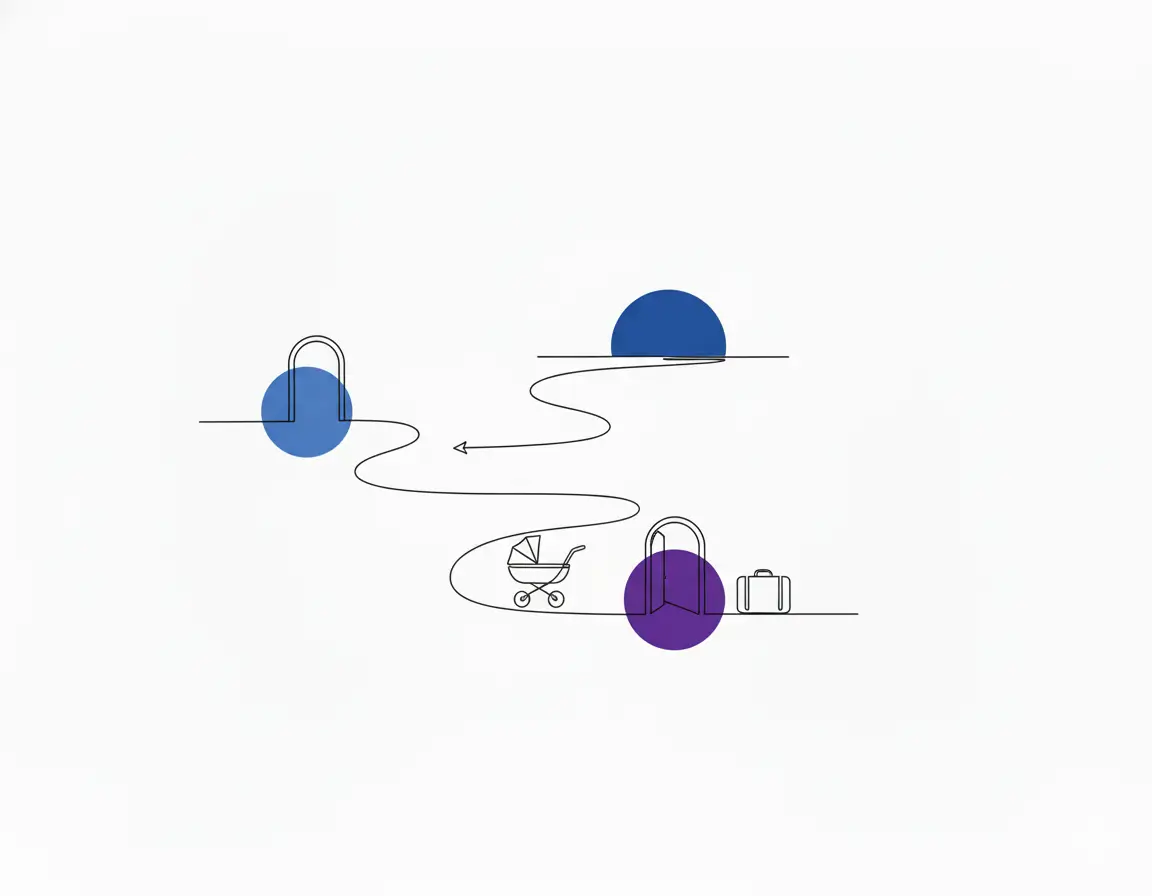

Booking a first session is the hard part for most people. For a lot of people, it also comes with a side of "wait, what actually happens in there?"
It's completely normal to feel nervous before your first session, whether you're coming in for anxiety, relationship difficulties, grief, or just a persistent feeling that something isn't right. Knowing what to expect can help you walk through the door feeling prepared, not anxious about the anxiety appointment.
Here's an honest look at what your first therapy session at InnerSight Psychotherapy typically looks like.
The Intake Conversation, What Your Therapist Is Assessing
Your first session is often called an "intake" or "initial assessment," and it's a little different from subsequent sessions. Think of it less as therapy and more as a two-way getting-to-know-you conversation.
Your therapist will ask questions about:
- What brought you in, what's been going on recently, and for how long
- Your personal and family history, to the extent you're comfortable sharing
- What you've tried before (if anything) to address what you're going through
- Your goals, what would "better" look like for you?
- Any practical considerations: sleep, lifestyle, support systems
Your therapist is gathering context so they can understand you as a whole person, not just a list of concerns. They're also beginning to think about which therapeutic approaches might be the best fit for what you're dealing with, whether that's individual therapy using CBT, DBT, EMDR, or something else entirely.
The initial assessment at InnerSight is a 70-minute session ($245). That is long enough for your therapist to get the shape of what is going on, and for you to stop feeling like you are being interviewed.
You Don't Have to Share Everything on Day One
This is something we can't say loudly enough: you are in control of your own story.
Some people come in ready to talk about everything. Others share a surface-level overview in the first session and go deeper over time. Both are completely valid. A good therapist will follow your pace, they won't push you to go somewhere you're not ready to go.
You also don't have to arrive with everything figured out. "I don't really know how to explain it, I just know something feels off" is a perfectly legitimate way to start. Your therapist is trained to help you find the words.
What you can expect: your therapist will be curious rather than clinical, and will not be sizing you up. There's no "wrong" way to show up to therapy.
What a "Good Fit" Actually Feels Like
The therapeutic relationship is one of the strongest predictors of good outcomes in therapy, more than any specific modality or technique. In other words: who you work with matters enormously.
So how do you know if it's a good fit after just one session? Look for:
You felt heard, not judged
Even if it was a little uncomfortable (that's normal), you should leave feeling like your therapist got something about you, rather than like you had been assessed.
They didn't push an agenda
A skilled therapist will reflect back what they heard, offer some framing, and begin to outline possible directions, but they shouldn't have a rigid plan already mapped out. Therapy is collaborative.
You could imagine going back
Not every first session ends with a warm glow. Sometimes you feel emotionally drained because you touched on things that are hard. But there should be something, a sense of possibility, of being understood, of trust, that makes you willing to return.
If the fit doesn't feel right after a session or two, it's okay to say so. We'll work with you to find someone on our team who's a better match. This is about you getting the support you deserve.
Questions to Ask Your Therapist
Therapy is a professional relationship, and you're entitled to ask questions. Here are some worth considering, especially in the early sessions:
- "What approach do you typically use for what I'm going through?", helps you understand what to expect
- "How do you usually structure sessions?", some therapists are more directive, others more open-ended
- "How will we know if therapy is working?", sets a baseline for progress
- "What's your approach to confidentiality?", important to understand the limits
- "How often would you recommend we meet?", weekly is typical early on, but it depends on your situation
Don't worry about having these memorized or making it feel like an interview. Ask what feels natural. A good therapist welcomes questions, it means you're engaged and invested.
What Happens Between Sessions
This surprises some people: the work doesn't stop when the session ends.
Your therapist may suggest things to try, notice, or reflect on between appointments, journaling prompts, mindfulness practices, small behavioural experiments, or simply paying attention to patterns. These aren't "homework" in the punitive sense, they're ways of keeping the conversation alive in your daily life so progress doesn't wait for the next appointment.
You might also find that difficult feelings come up in the days after a session. This is normal, especially if you touched on something significant. It's part of the process. If it feels overwhelming, reach out to your therapist, you don't have to white-knuckle it between sessions alone.
Over time, you'll likely notice the work of therapy showing up in real life: catching yourself in an old pattern, choosing a different response, feeling slightly lighter in situations that used to be unbearable. That's progress. It doesn't announce itself loudly, it tends to sneak up on you.
Ready to Take That First Step?
We know walking into a first therapy session takes courage. Our team at InnerSight Psychotherapy is here to make that experience as comfortable and welcoming as possible, from the first conversation to the last.
We offer a free 20-minute consultation so you can connect with a therapist before committing to a full session. No referral needed. No pressure. Just a real conversation about what you're looking for and whether we're the right fit.
- 📞 Call us: (905) 553-9507
- 💻 Book online: psychotherapyclinic.janeapp.com
- 🌐 Explore our services: Individual Therapy at InnerSight
Available in Vaughan, Woodbridge, Barrie, and virtually across Ontario. Evenings and weekends available.