
Mindfulness-based therapy in Vaughan
If your mind runs you, the worry loops, the replays, the spiral of self-criticism, mindfulness offers a different way to relate to your thoughts. Not to empty your mind, but to stop being swept away by it.
No referral needed · in-person or online · with Registered Psychotherapists.

Psychotherapists
supervision
risk in research
20 minutes
Clinically reviewed by Svetlana Antonyshyn, Registered Psychotherapist (CRPO #001652). Last reviewed June 2026.
What mindfulness-based therapy is
Mindfulness-based therapy is a secular, skills-based approach that trains you to pay deliberate, kind, non-judgmental attention to the present moment, and to change your relationship to hard thoughts and feelings rather than wrestling them to the ground. It is a learnable skill, like learning an instrument, not a belief system.
It draws on two well-known structured programs: Mindfulness-Based Stress Reduction (MBSR), created by Jon Kabat-Zinn in 1979, and Mindfulness-Based Cognitive Therapy (MBCT), developed by Segal, Williams and Teasdale, which blends mindfulness with CBT to help prevent depression from returning. We weave these skills into your therapy and tailor them to you.
Importantly, mindfulness is not about emptying your mind or forcing calm on demand. It is about noticing what is here, including a busy mind, and learning to step back from the thoughts that would otherwise pull you under.
Mindfulness-based therapy teaches you to notice your thoughts as passing mental events rather than facts, so anxious or self-critical thinking loses some of its grip and you can choose how to respond.
Meet therapists who work with mindfulness
All Registered Psychotherapists who integrate mindfulness into their work. Watch a short intro, read their full profile, or let us match you in your free consultation.
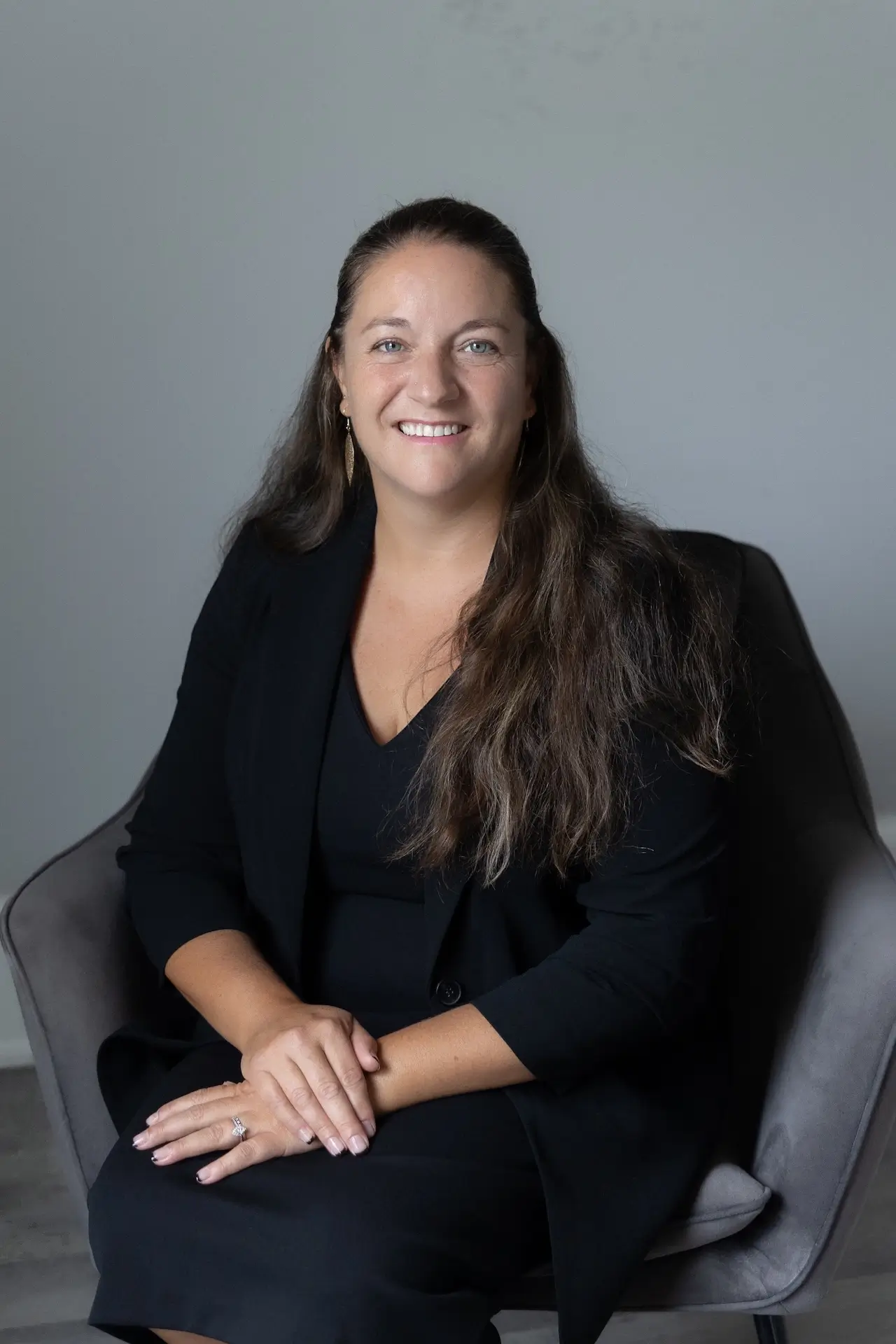

Elnaz Bayandor
Not sure who fits? Browse all 24+ therapists or let us match you in a free consultation. You can switch anytime, and your file moves with you.
The skill at the heart of it: stepping back
The core mindfulness move is noticing a thought as a thought, not a fact. It is called decentering, and it can quietly change your whole relationship with your thoughts. Pick a thought that sounds familiar.
“I replay every mistake until it hardens into a verdict: I’m just a failure.”
You learn to notice it as a passing thought, not a truth. “I’m having the thought that I’m a failure,” said with curiosity rather than belief.
“The thought is still there, but I’m no longer fused with it. I can let it pass, like weather.”
This is a skill that grows with practice, in and out of session. Learn it with a therapist, free for 20 minutes.
Most powerful for the mind that will not settle
Mindfulness-based therapy is especially helpful for recurring low mood and the kind of anxious, looping thinking that talk alone does not always quiet.
Mindfulness is one of several therapy approaches we draw on. It works best as part of therapy and alongside other care, not as a replacement for treatment of severe illness.
Helpful, with honest limits
The evidence is real and worth knowing precisely, both its strengths and its edges.
Mindfulness-Based Cognitive Therapy reduced the risk of depression relapse by about a third compared with usual care, an effect comparable to staying on antidepressants.
The UK’s NICE recommends Mindfulness-Based Cognitive Therapy to help prevent relapse in people who have had three or more episodes of depression.
A review of 47 trials and about 3,500 people found moderate evidence that mindfulness programs ease anxiety, depression and pain.
The honest edge: mindfulness is not a first-line treatment for severe, acute depression, and works best alongside other care, never as a replacement for medication.
NICE NG222, 2022
We will never tell you mindfulness fixes everything. What the research supports is meaningful: a real, skill-based way to lower the odds of depression returning and to ease anxiety and stress, taught by therapists who fit it to your life.
What it looks like in practice
Practical and unintimidating. You learn simple skills and apply them to real moments, with a therapist guiding the way.
You do not need to be calm, flexible, or “good at meditating.” A wandering mind is normal, noticing it is the practice.
Simple, short practices
Your therapist guides you through approachable practices, a few minutes of breath, a body scan, noticing thoughts come and go, no incense or hours of silence.
Off the cushion, into your day
You bring the skills to the moments that matter: a stressful commute, a 3am worry spiral, a wave of self-criticism, learning to step back in the thick of it.
Steadier, kinder, faster to recover
With practice, many people find they recover from hard moments a little quicker and relate to their own minds with more steadiness and kindness.
Practical, evidence-informed, and woven into your therapy
Our therapists integrate mindfulness skills where they help, alongside other evidence-based approaches, all chosen to fit what you are working on.
InnerSight was founded by Svetlana Antonyshyn, RP, on the belief that healing should treat the person, not a label. More about our approach.
What therapy costs in Vaughan
No hidden fees. Most private insurance plans cover a portion of psychotherapy fees.
Meet a therapist, ask anything, and see if a mindfulness approach feels right. No obligation.
Most private insurance plans cover a portion of services from a Registered Psychotherapist, and we bill Sun Life, Beneva (formerly SSQ) and Green Shield directly. Your first full appointment is a 70-minute initial assessment at $245.
Sessions with supervised therapists in training, at a lower rate. Guided by experienced clinical supervisors.
Psychotherapy may also qualify for the medical expense tax credit in Canada. Worried about cost? See our reduced-fee program.
Your questions, answered
What is mindfulness-based therapy?
It is a secular, skills-based approach that helps you pay deliberate, non-judgmental attention to the present moment and change your relationship to difficult thoughts and feelings, rather than fighting them. It draws on structured programs like Mindfulness-Based Stress Reduction (MBSR) and Mindfulness-Based Cognitive Therapy (MBCT), and we weave these skills into your therapy.
Is mindfulness-based therapy evidence-based?
Yes, with honest limits. Its strongest evidence is for preventing relapse in recurrent depression: a 2016 analysis in JAMA Psychiatry found Mindfulness-Based Cognitive Therapy reduced relapse risk by about a third compared with usual care, comparable to staying on antidepressants. A large 2014 review found moderate evidence that mindfulness eases anxiety, depression and pain. It is not a quick fix, and not a first-line treatment for severe, acute depression.
Do I have to clear my mind or meditate for hours?
No. Mindfulness is not about emptying your mind or forcing calm. It is the skill of noticing what is happening, including a busy mind, with curiosity and without judgment. You learn short, practical practices, like a few minutes of breath or a body scan, that fit into real life.
Is it religious?
No. While mindfulness has roots in contemplative traditions, the clinical programs were deliberately made secular and built for healthcare. What we teach is a practical attention skill, with no belief system required.
What does mindfulness-based therapy help with?
It is especially helpful for preventing depression from coming back, and for easing anxiety, stress, emotional reactivity and rumination. It works best as part of therapy and alongside other care, not as a replacement for treatment of severe illness.
Can it replace my medication?
No. Mindfulness-based therapy can complement other care, but it is not a substitute for medication, and you should never stop or change medication without talking to your physician. Our Registered Psychotherapists do not provide medication.
Can I do it online?
Yes. Mindfulness skills translate very well to secure video sessions anywhere in Ontario, and we also offer therapy in person in Woodbridge, Vaughan and Barrie.
Do I need a referral?
No referral is needed. You can book a free 20-minute consultation online at psychotherapyclinic.janeapp.com or call (905) 553-9507. Sessions are delivered by Registered Psychotherapists, and most private insurance plans cover a portion. We bill Sun Life, Beneva (formerly SSQ) and Green Shield directly. Your first full appointment is a 70-minute initial assessment at $245, and ongoing sessions are $180 for 55 minutes.
Mindfulness therapy near you: Vaughan, Woodbridge, Barrie & online
In-person sessions at three locations, plus secure video sessions anywhere in Ontario. Evenings and weekends available.
Three steps, starting today
Book your free consult
Online in 2 minutes or by phone. No referral, no credit card.
Meet your therapist
Talk it through and get matched with the right fit for you.
Build the skill
Learn to step back from the spiral, and carry that calm into daily life.