
Trauma-focused therapy in Vaughan
Something small sets it off, a tone of voice or the smell of a stairwell, and your body has already reacted before you decided anything. Trauma-focused therapy in Vaughan is the part of the work that turns toward the memory on purpose, once you are steady enough for that. Every therapist here holds a trauma-informed stance. Seven of them are trained to deliver trauma-focused treatment, and this page explains the difference before you book anything.
No referral needed · in-person or online · with Registered Psychotherapists.

Psychotherapists
supervision
processing after
20 minutes
Clinically reviewed by Svetlana Antonyshyn, Registered Psychotherapist (CRPO #001652). Last reviewed August 2026.
What does trauma-focused therapy in Vaughan actually involve?
Trauma-informed care is a stance every therapist at InnerSight holds: paced by you, consent-led, aware of what the body is doing. Trauma-focused treatment is a smaller set of methods that work directly with the memory. At InnerSight that means EMDR, trauma-focused CBT, Internal Family Systems and somatic approaches, delivered by seven therapists trained in that work.
Trauma-informed describes how a therapist runs any session with anyone: you set the pace, nothing gets prised out of you, there is a check before anything intense, and someone is watching what your body does while you talk. Sixteen therapist profiles on this site use that phrase. It applies whether you came in about a car accident or about a manager whose voice reminds you of someone.
Trauma-focused describes a smaller set of methods that go to the memory itself and work on it directly. At InnerSight that means EMDR, trauma-focused CBT, Internal Family Systems and somatic approaches, and seven of our Registered Psychotherapists hold training in that work. The aim is that the memory stops arriving as a present-tense event, so a raised voice or a particular stretch of highway stops taking the rest of the day with it.
Turning toward a memory on purpose is harder than talking around it, and the difficulty shows up in the numbers. A review of 116 trials found that 16 percent of people leave psychological therapy for PTSD early, and dropout was higher for trauma-focused approaches at 18 percent against 14 percent for methods that stay away from the memory. It is also the wrong place to begin while something dangerous is still running in your present: an active crisis, substance use that needs medical care first, a living situation that is not safe yet.
Which of those four you start with depends on how the memory sits now and on what you can tolerate at the beginning. That is a conversation in the first few sessions rather than an allocation made for you, and you can change direction if the first route turns out to be the wrong one. Our Registered Psychotherapists do not diagnose or prescribe, and they work alongside your family doctor. If you want the condition itself explained, our PTSD page does that, and our EMDR page walks through that single protocol session by session.
Who at InnerSight delivers trauma treatment?
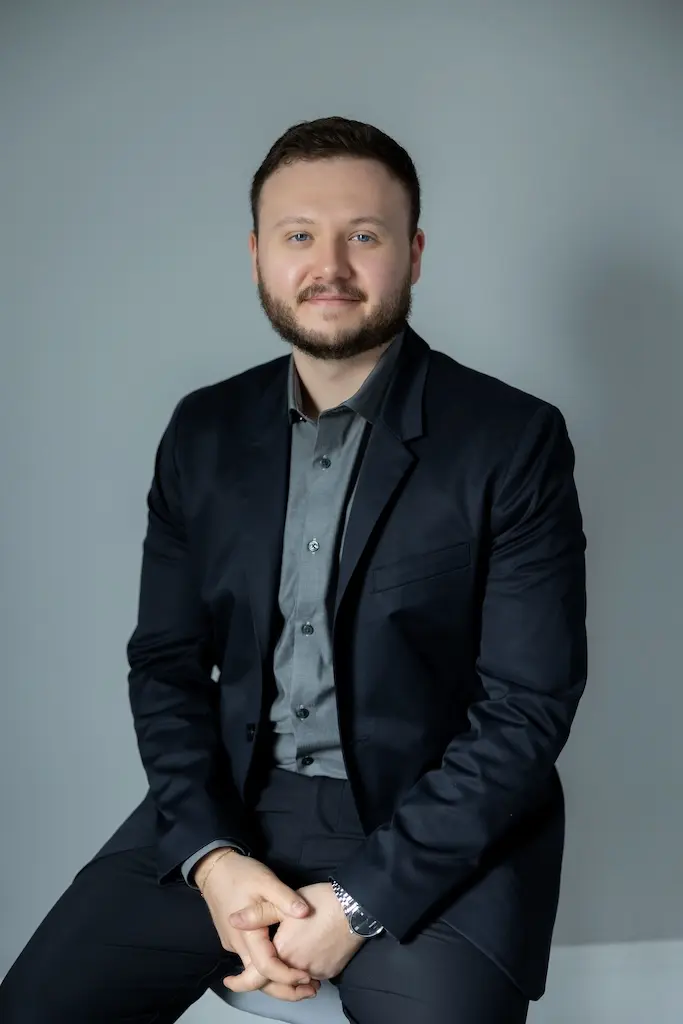
Seven of our Registered Psychotherapists are trained in trauma-focused work, EMDR and trauma-focused CBT among it, and three of them are here. Sabrina Giralico, RP, CRPO 15356, practises EMDR at Woodbridge and works in a 2SLGBTQIA+ affirming way, which matters when part of what happened was about who you are. Carol McDowell, RP, CRPO 10937, works out of Barrie and brings a background in trauma, PTSD and substance use, so the tangle of drinking, sleep and flashbacks is familiar ground.
Cristian Renzi, RP, CRPO 12088, practises EMDR at the Maple office and has worked in inpatient addiction treatment, which is often where trauma and substance use meet. What we are describing is training rather than certification: in Ontario a therapist does not need to be certified in a method in order to practise it, and what is required is appropriate training and demonstrated competence.
The remaining four are on our therapists page, and everyone else here holds a trauma-informed stance and will refer you on if memory work is what you want.

Sabrina Giralico

Carol McDowell
It made sense at the time
Four things people bring into a first session as evidence that something is wrong with them. Each one is a reasonable thing for a body to have learned.
You sit facing the door and know where the exits are before you have taken your coat off.
Threat detection does not switch off just because the threat has. A system that learned to scan a room keeps doing the job it was given until the memory it is answering gets updated, and updating that memory is what trauma processing is for.
What trauma-focused therapy is used for
A car door slams in the parking lot and your heart is already going before you have worked out why. The reaction lands first and the explanation turns up several seconds later, if it turns up at all.
You wake at roughly the same hour most nights and lie there listening to the house. Some people notice they have started checking the locks twice, or sleeping in the clothes they wore that day, without ever deciding to.
You can describe what happened in a level voice and feel almost nothing, and the blankness unsettles you more than crying would. Talking about it feels like reading out someone else's file.
You take the long way to work to miss one intersection. Invitations get declined with a reason that is true but is not the actual reason.
Your voice is up before you have decided anything, usually over something small, and the guilt afterwards outlasts the argument by days. Nobody in the room is more surprised by it than you are.
There is no single incident to point at, just a long stretch of a household where you learned to read a mood from the sound of a door closing. You have been told it was a long time ago, which is accurate and has not made a difference.
The event is over, the outcome was fine, and everyone else has moved on, and you still cannot drive past that hospital or sit in the passenger seat. Medical and accident trauma often gets played down for exactly that reason.
You read a partner's tone for the first sign that something is wrong and start preparing hours ahead of any actual problem. Closeness and alertness have become the same feeling.
Does working directly with the memory actually help?
Working directly with the memory is the best evidenced treatment for PTSD there is, across more trials and more people than any alternative. The honest trade-off is that more people leave it early: 18 percent against 14 percent for approaches that avoid the memory.
people across 114 randomized trials, the largest review of its kind. Therapies that work directly with the trauma memory, along with EMDR, produced clinically important symptom reductions.
Lewis, Roberts, Andrew, Starling & Bisson, European Journal of Psychotraumatology, 2020
leave before finishing: dropout is higher for trauma-focused approaches than for approaches that do not work with the memory directly. Across 116 trials, 16 percent left overall.
Lewis, Roberts, Gibson & Bisson, European Journal of Psychotraumatology, 2020
of Canadians have been exposed to at least one potentially traumatic event. About 8 percent of adults had symptoms in the previous month meeting the criteria for probable PTSD.
Statistics Canada, Survey on Mental Health and Stressful Events (The Daily), 2022
adults across 70 trials. Trauma-focused CBT and EMDR both outperformed waiting lists and usual care.
Cochrane rated the overall quality of that evidence very low.
Bisson et al., Cochrane Database of Systematic Reviews (CD003388), 2013
adults with PTSD from childhood abuse. Eight sessions of skills training before EMDR produced no better result than starting EMDR straight away, and roughly 69 percent no longer met the criteria for PTSD afterwards.
van Vliet, Huntjens, van Dijk, Bachrach, Meewisse & de Jongh, BJPsych Open, 2021
Does steadying work have to come first?
Standard practice builds stability before opening a memory, and for many people that order is what separates processing from flooding. The research is less settled than the practice. In a trial of 121 adults with PTSD from childhood abuse, eight sessions of skills training before EMDR produced no better result than starting EMDR straight away, and roughly 69 percent no longer met the criteria for PTSD afterwards (van Vliet and colleagues, BJPsych Open, 2021).
So the stages below are a map we adjust with you, not a queue you have to wait in.
Trauma-focused work asks you to turn toward the memory on purpose, and that is harder than talking around it.
Getting steady enough to look
The early sessions map what sets you off and what brings you back down, and build things you can use outside the room: a way out of a dissociative drift mid-conversation, something that helps at 3am, a plan for the drive home after a hard session. For a single recent incident this can take one or two sessions. For something that ran for years it can take months, and that is not lost time.
Working with the memory itself
Processing sessions are structured and time-limited, with a deliberate close so nothing is left open when you walk out the door. Depending on the method you follow eye movements, speak with the part of you that has been carrying it, or track what your body does as the memory comes near. Your therapist slows things down before you are overwhelmed, and you can call a halt at any point without explaining why.
Testing it against your actual life
Whether the work held shows up outside the room: driving that road, sitting through that family dinner, hearing that tone of voice and staying in the conversation anyway. This stage usually involves approaching a few things you have been steering around, in an order you choose, and noticing what your body does now that it has less to defend.
Which trauma-focused therapy in Vaughan would suit you?
You hold an image, the belief about yourself that came attached to it and the place it sits in your body, while following short sets of eye movements. Between sets you report whatever moved. Most people notice the memory going flatter and further away before they notice anything changing in their week. Sabrina Giralico and Cristian Renzi both practise it. Our EMDR page covers the eight phases in full.
Trauma tends to install a conclusion and leave it running: it was my fault, I should have seen it coming, nothing is safe now. Trauma-focused CBT works on that conclusion directly, testing it against what you actually knew at the time, and pairs that with a gradual return to the situations you have been steering around. It sits alongside EMDR as the most researched of these approaches, and it suits people who want structure and something to work on between sessions. The seven therapists trained in trauma-focused work here all have the cognitive behavioural grounding it runs on, including all three below.
The part that scans every room for the exit and the part that goes cold and insists none of it mattered are both doing a job they took on when you were much younger. IFS works with those parts one at a time, in your own words, before going near what they are protecting. It suits people who find direct memory work too fast, and people who describe themselves as being at war with themselves.
Jaw, chest, hands that will not settle. Somatic work tracks sensation in small doses and stops well before you tip out of your window of tolerance, so your nervous system gets repeated evidence that it can come back down. This is often the route for people who have already talked it through, understand exactly what happened to them, and still cannot sleep.
If a present danger is still running, an active crisis, substance use that needs medical attention first, or a home that is not safe, memory work waits. Sessions go to sleep, grounding, boundaries and getting practical support in place, alongside your family doctor where that helps. Some people stay at this stage for a long stretch and get most of what they came for. Nobody will push you past it on a schedule.
What therapy costs in Vaughan
No hidden fees. Most private insurance plans cover a portion of psychotherapy fees.
Meet a therapist, ask anything, and see if this approach feels right. No obligation.
Most private insurance plans cover a portion. Your first individual appointment is a 70-minute assessment at $245.
Full-length sessions for partners and families. Your first couples or family appointment runs 90 minutes at the same rate.
Reduced-fee sessions from $125 are available with select supervised therapists in training through our affordable therapy program.
Your questions, answered
What is the difference between trauma-informed and trauma-focused therapy?
Trauma-informed is a stance about how any session runs. You set the pace, nothing gets prised out of you, and the therapist watches what your body is doing rather than only what you are saying. Most of our team works this way. Trauma-focused is a treatment decision. It means the memory itself becomes the material, through EMDR, Internal Family Systems or somatic work. You can have the first without the second for as long as you want, and a good number of people do exactly that and still get what they came for.
Is trauma-focused therapy the same thing as EMDR?
EMDR is one of the trauma-focused methods we offer. The category is wider than that one protocol. EMDR and trauma-focused CBT are the two with the strongest research behind them, and EMDR tends to be the name people arrive with. Trauma-focused CBT, Internal Family Systems and somatic approaches all work directly with what a memory left behind, and some people respond better to those, particularly when eye movements feel too fast or too clinical. Sabrina Giralico and Cristian Renzi both practise it. Our EMDR page walks through what one session looks like from start to finish.
Is it PTSD or complex PTSD?
Registered Psychotherapists in Ontario do not diagnose, so nobody here will hand you either label. What we can do is describe what you are living with and choose the work accordingly. The distinction people are usually reaching for is between one event that will not settle and years of something ongoing, often beginning early, which tends to show up in how you relate to people rather than only in flashbacks. The second usually needs more steadying time before processing. Your family doctor, a psychiatrist or a psychologist can provide a formal diagnosis if you need one for work or insurance.
Do I have to describe what happened in detail?
Not in the way most people fear. EMDR asks for an image, a belief about yourself that came with it, and where you feel it in your body, which is far less narration than telling the story from beginning to end. Internal Family Systems often starts with the part of you that guards the memory rather than the memory. Somatic work can begin with sensation and go nowhere near the specifics. Some people do want to say all of it out loud, and that is available too. You control what gets said and when.
Will trauma therapy make me feel worse before I feel better?
Sometimes, and we will not pretend otherwise. Turning toward a memory on purpose can stir up broken sleep, irritability and vivid dreams for a few days after a processing session. A review of 116 trials found 18 percent of people left trauma-focused therapy early against 14 percent for approaches that stay away from the memory, so the difficulty is measurable rather than imagined. What reduces it is pacing: shorter processing, more grounding, and a plan for the 48 hours afterwards. Tell your therapist when a session was too much. That is information, and the plan changes.
How many sessions does trauma-focused therapy usually take?
The trials give a useful anchor. The EMDR study cited above ran 16 sessions, and reviews of trauma-focused work generally fall somewhere between 8 and 20. Add whatever steadying time you need before processing starts, which might be one conversation or several months. A single incident sitting on top of an otherwise stable life usually resolves faster than something that ran for years. At $180 for a 55-minute session that arithmetic matters, so ask your therapist for an honest estimate around the third or fourth session, once they know you well enough to give one.
Do I need a diagnosis or a doctor's referral to start trauma therapy in Ontario?
No referral is needed to see a Registered Psychotherapist in Ontario, and you do not need a diagnosis to begin. You can book a free 20-minute consultation directly. Two things are worth checking first. Some extended health plans require a physician referral before they reimburse psychotherapy, and psychotherapy is not covered by OHIP, so it is private pay or insurance. If you already work with a family doctor or a psychiatrist, we can coordinate with them at your request, since Registered Psychotherapists do not prescribe or manage medication.
Can therapy help with something that happened decades ago?
Yes, and old material is not a lesser reason to come. The EMDR trial cited above involved adults carrying PTSD from childhood abuse, much of it decades old, and roughly 69 percent no longer met the criteria for PTSD by the end. Time on its own does not process a memory. It buries it under a life, which tends to hold until a birth, a death, a diagnosis or a child reaching the age you were pulls it back up. People often arrive here in their forties and fifties saying they thought this was dealt with years ago.
Where to see us in person, or meet online
Three offices across Vaughan and Barrie, plus secure video sessions anywhere in Ontario. Evenings and weekends available.
Three steps, starting today
Book your free consult
Online in 2 minutes or by phone. No referral, no credit card.
Meet your therapist
Talk it through and get matched with the right fit for you.
Process at your pace
Nothing gets opened before you have the footing to handle it. You can slow down at any point.