
Premarital counselling in Vaughan for couples getting ready to marry
The venue is booked, and the seating chart has had more attention than any conversation the two of you have had about money. Premarital counselling in Vaughan is a short block of sessions for couples who are doing well and want to compare notes on purpose, with a Registered Psychotherapist setting the agenda. You do not need to be struggling to book one.
No referral needed · in-person or online · with Registered Psychotherapists.

Psychotherapists
supervision
a head start
20 minutes
Clinically reviewed by Svetlana Antonyshyn, Registered Psychotherapist (CRPO #001652). Last reviewed August 2026.
What is premarital counselling in Vaughan, and who books it?
Premarital counselling is a short block of sessions for engaged or committed couples before marriage. A Registered Psychotherapist steers structured conversations about money, in-laws, children, the division of labour, faith and sex, so the two of you compare expectations deliberately instead of discovering them in the third year of the marriage.
Two people sit with one Registered Psychotherapist for a set number of sessions before the wedding, and the therapist steers the hour toward the subjects that tend to arrive later: money, in-laws, whether and when to have children, who does what at home, faith, and what each of you expects of sex. The work is preventive. Nobody is being assessed, and no one leaves with a score.
Couples arrive at this from different places. Some have shared a mortgage for six years and have never once divided the finances on paper. Some are marrying across two religions and have four parents with opinions about the ceremony. People in Canada also marry later than they used to: the average age at marriage in 2017 was 31 for men and 29 for women, up from 25 and 22 in 1970, according to Department of Justice Canada. Merging two settled careers, two sets of habits and two credit histories is a different task than merging two twenty-two-year-olds.
A wedding date is not a requirement. Statistics Canada recorded that 23 percent of Canadian couples were living common law in 2021, the highest proportion in the G7, and couples who are buying property or combining incomes face the same list of questions with or without a ceremony.
This is preventive work, so it is a poor fit if one of you is already wondering whether to leave, or if there has been an affair, or if the fighting has a groove worn into it. Couples in that position do better starting with couples therapy, and marriage and relationship therapy covers the same ground once the marriage is underway. Registered Psychotherapists do not diagnose or prescribe, and premarital counselling makes no promise about how a marriage turns out.
The therapists who take premarital counselling at InnerSight
Six of our clinicians take this work. Yulia Evans (RP, CRPO 14326) names premarital counselling and conflict resolution in her own practice description, and she is the most direct fit if you want the six subjects worked through in order. Svetlana Antonyshyn (RP, CRPO 001652), who founded the clinic, works as a relationship counsellor and sees couples at the Woodbridge office.
Teresa Di Panfilo (RP, CRPO 19045) works with individuals and couples on the relationship patterns that keep repeating, and practises the Gottman Method. Carol McDowell (RP, CRPO 10937) holds advanced training in the Developmental Model of Couples Therapy. Valeria Matei (RP, CRPO 14052) and Hanna Anderson (RP Qualifying, CRPO 17979) hold training in the Gottman Method, whose research on what predicts a lasting marriage sits behind much of this page, and the approaches all five draw on are set out on the Gottman Method page.
You keep the same therapist for the whole block. If the fit is wrong after the first session, say so at the start of the second one and we will move you.

Yulia Evans

Svetlana Antonyshyn
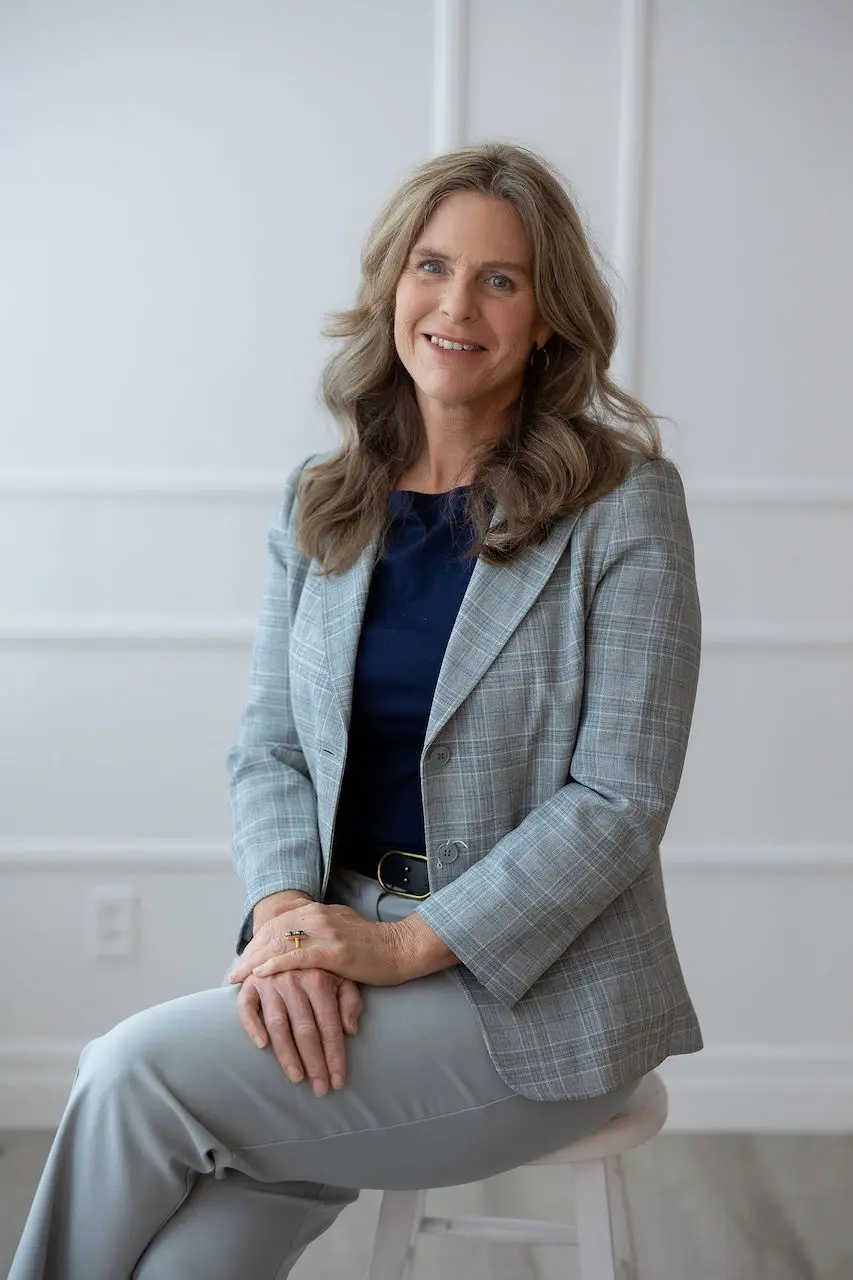
Carol McDowell

Valeria Matei

Hanna Anderson
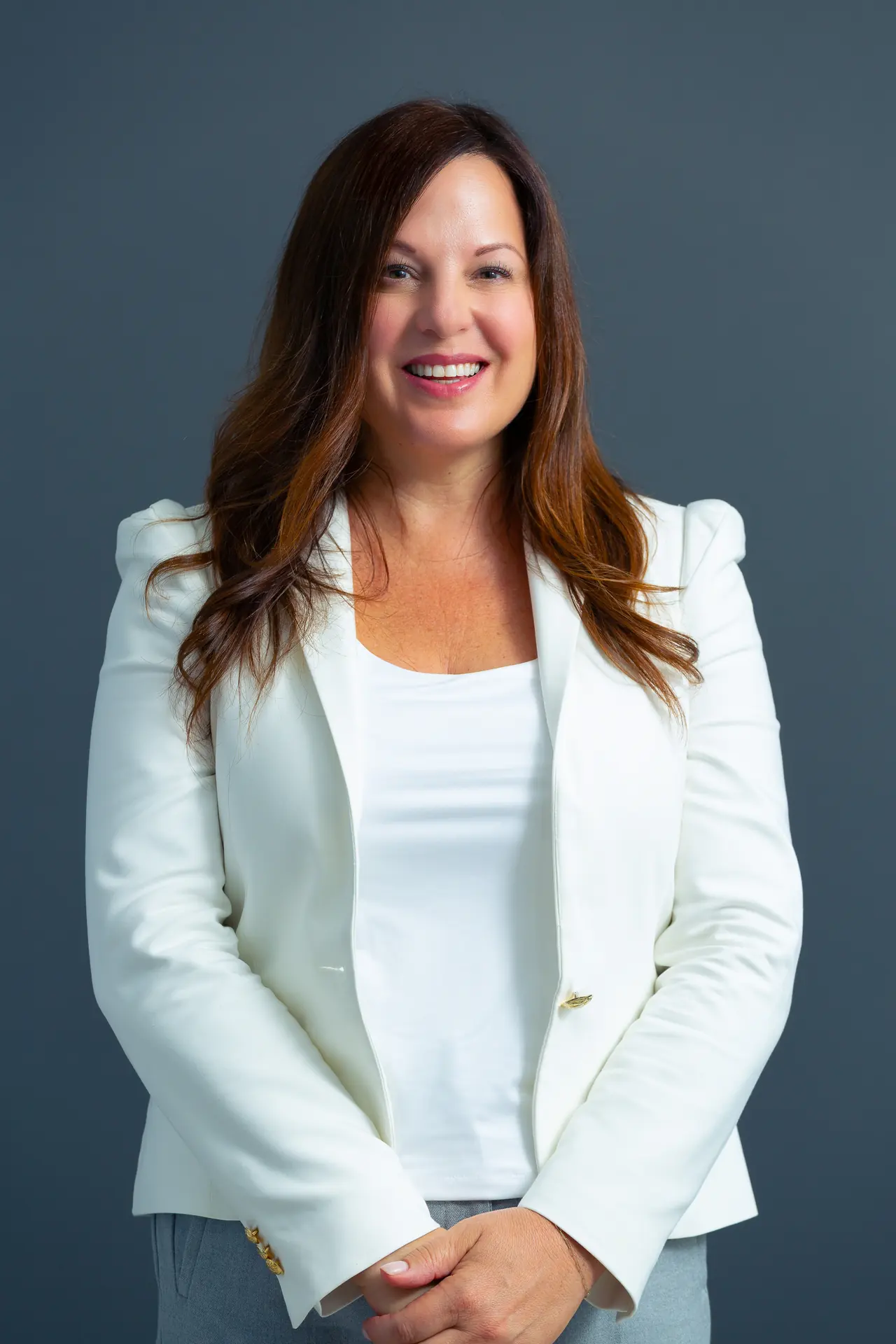
Teresa Di Panfilo
Four conversations that come back later
These are the subjects that surface in year five rather than year one. On the left is how the disagreement usually sounds. On the right is the question a therapist would put in front of you instead.
We are arguing about whether four thousand dollars for a honeymoon is reasonable.
The number is rarely the thing to settle first. One of you grew up watching money run out and the other grew up watching it get spent on the family, so the same figure means safety to one person and meanness to the other. The useful question is who gets to decide, and at what amount you two check with each other.
What the research says about starting early
What premarital counselling covers
You have been together for three years and still do not know what the other person earns, owes, or thinks is a reasonable amount to spend on a wedding. Each time the subject comes up, one of you changes it and the other decides it is not worth the argument tonight.
Your parents phone every Sunday and expect both of you at the table; their parents visit twice a year and send a message on birthdays. Neither of you believes it is your own family that is being unreasonable.
One of you said in a few years and the other heard by thirty-one. You have both been planning around that answer without ever checking what the other person meant by it.
Right now chores get split by whoever notices first, and that has worked fine in a one-bedroom apartment. You are less certain it will hold once there is a mortgage payment, a rotating shift schedule, or a baby who wakes at four in the morning.
One family assumes a religious ceremony and the other assumes the children will be raised in a different tradition. Planning the wedding has turned a private difference between the two of you into a public negotiation between four sets of relatives.
How often, who initiates, and what counts as closeness after a twelve-hour day have all been settled quietly by habit rather than by conversation. Neither of you is unhappy exactly, and neither of you has said anything.
One of you wants it resolved before bed and the other needs to leave the room to think. Nothing gets decided, and by breakfast you are both behaving as though the evening did not happen.
You are bringing a former partner, a custody schedule and children with strong opinions into a new household. Discipline, money and where everyone spends the holidays are questions to answer before the wedding rather than after it.
Does premarital counselling in Vaughan work, and how well?
Premarital work has good evidence for what it teaches and shakier evidence for what it guarantees. Communication gains hold up repeatedly. The satisfaction gain disappeared once unpublished studies were counted, and how many hours you do matters more than almost anything else.
studies across 86 research reports. Couples who took a relationship education course improved more than couples who did not, with the clearest gains in how they communicated.
the effect. Across 148 evaluation reports, programmes running 9 to 20 contact hours produced roughly four times the communication gain of programmes running 1 to 8 hours.
Hawkins, Stanley, Blanchard & Albright, Behavior Therapy 43(1):77-87 (via PubMed / PMC), 2012
surveyed at random. Couples who had done premarital education reported higher satisfaction and commitment, lower conflict and lower odds of divorce, and the pattern held across income, race and education.
Stanley, Amato, Johnson & Markman, Journal of Family Psychology (via PubMed), 2006
participants in the 12-hour Gottman Seven Principles course against 242 controls. Relationship quality improved and held at six-month follow-up, whether the course ran in person or online.
in relationship satisfaction. When 47 studies were re-examined with the never-published ones included, that benefit did not hold up. The improvement in how couples communicated still did.
Fawcett, Hawkins, Blanchard & Carroll, Family Relations (via ERIC), 2010
How many premarital counselling sessions should you plan for?
Everything below happens with one therapist and both of you in the room together. InnerSight also runs relationship classes on Sundays, so ask at the consult whether one is scheduled before your date.
Nearly all of the research support comes from structured education programmes that run to a manual for roughly 9 to 20 hours, not from open-ended counselling, so the evidence applies to what happens in a session here only by inference.
A free 20-minute consult
No charge, by phone or video, with both of you or with whichever one of you is doing the research. You describe your date, your budget and what you want covered, and we point you to the therapist whose training fits. If the consult suggests you would be better served by repair work, we will tell you that instead of booking you in.
A 90-minute first session, $280
Longer than the ones that follow, because it covers how you met, what each set of parents modelled about marriage, and what the two of you assume without having checked. It ends with an agenda for the rest of the block, chosen by you rather than handed to you. Some couples discover the agenda itself is where they disagree.
A block of 85-minute sessions, $280 each
Usually one subject per session. Eight sessions comes to roughly 11 contact hours, which lands inside the 9 to 20 hour band that performed best in the dosage research; four comes to under 6. Plenty of couples book four because of time and cost. That is a fair choice, and it is worth naming the trade-off before you start rather than after.
The six subjects premarital counselling covers before they become arguments
Joint account, separate accounts, or both. Which debts each of you carries into the marriage, and whether they stay separate. What happens when one income is nearly double the other. What each of you was taught about spending by watching your parents, and how that shows up in a grocery bill or a car purchase. Couples often work out the mechanics in one session and spend the next one on what the mechanics mean.
Counselling cannot manufacture an agreement that does not exist. If one of you wants children and the other does not, a block of sessions will make that difference clear and give it language, without dissolving it, and a small number of couples leave with a decision they did not arrive expecting to make. For couples who already agree, the work is timing against two careers, questions worth raising with your family doctor, and how each of you was parented.
Whose family gets which holiday, and who makes the phone call. What it means when one mother calls your partner about your career choices. Interfaith couples work through the ceremony, how children would be raised, and what to say to relatives who ask. A boundary usually has to be held by the person whose family it is, which is easier to agree in a quiet room months ahead of the first test.
Who books the dentist, who notices the fridge is empty, who takes the day off when someone is sick. Then the conversation most couples skip: how often each of you imagines having sex once the wedding is done, who initiates, and what happens when desire is out of step. Registered Psychotherapists provide counselling, so anything physical or medical belongs with your family doctor.
What therapy costs in Vaughan
No hidden fees. Most private insurance plans cover a portion of psychotherapy fees.
Meet a therapist together or on your own, ask anything, and see if this feels like the right fit. No obligation.
Full-length sessions for partners. Your first couples appointment runs 90 minutes at the same rate. Most private plans cover a portion.
Many people also do individual work alongside, or instead of, couples sessions.
Reduced-fee sessions from $125 are available with select supervised therapists in training through our affordable therapy program.
Your questions, answered
What is premarital counselling and what happens in the first session?
It is a set block of sessions for two people planning to marry, run by a Registered Psychotherapist who sets the agenda and keeps it moving. The first session runs 90 minutes. Expect questions about how you met, what each set of parents modelled about marriage, what you each assume about money and children, and what you want settled before the date. You leave with an agenda for the sessions that follow, chosen by the two of you. Nothing is diagnosed, and nothing is graded.
How many premarital counselling sessions do most couples do?
Four to eight is the range we usually suggest, at 85 minutes each after the 90-minute first session. The number matters more than couples expect. In a pooled analysis of 148 program evaluations, courses running 9 to 20 contact hours produced roughly four times the effect of courses running 1 to 8 hours. Eight sessions here comes to about 11 hours, inside that stronger band. Four comes to under 6. If your calendar and budget allow the longer block, the evidence favours it, and four is still a reasonable place to start.
What is the difference between premarital counselling and couples therapy?
Premarital counselling assumes the relationship is in decent shape and works on subjects the two of you have not settled: money, in-laws, children, household labour, faith, sex. Couples therapy starts from something that already hurts, such as an affair, a fighting pattern neither of you can interrupt, or years of accumulated resentment. The room looks the same and the therapist may even be the same person. What differs is where you begin and what a good ending looks like. If you are already unsure whether the wedding should go ahead, say so at the consult.
Does premarital counselling actually lower the chance of divorce?
The evidence points that way without settling it. A household survey across four American states found that couples who had done premarital education reported higher satisfaction and commitment, lower conflict and lower odds of divorce, and the pattern held across income, race and education levels. That is survey data, so couples who seek out education may already differ from couples who do not in ways the numbers cannot separate. Almost all the supporting research tested structured programs that run to a manual, so nobody can quote you a divorce rate. Communication gains are what hold up most consistently.
Do we have to be religious or getting married in a church to do premarital counselling?
No. Some couples come through a church, mosque, synagogue or temple that asks for preparation before the ceremony, and these sessions can serve that purpose. Many others have no religious requirement at all and simply want the conversations. If the two of you come from different faiths, or one of you practises and the other does not, that becomes one of the subjects on the agenda: the ceremony itself, how children would be raised, which holidays you keep, and how you answer relatives who have strong views. Our therapists help the two of you reach your own answer.
How much does premarital counselling cost in Vaughan and does insurance cover it?
A couples session is $280 for 85 minutes, and the first session runs 90 minutes at the same rate. The 20-minute consult beforehand is free. There is no OHIP coverage for psychotherapy in private practice. Many extended health plans reimburse services provided by a Registered Psychotherapist, though some exclude couples work specifically, so read the wording of your plan before the first appointment. InnerSight bills Sun Life, SSQ and Green Shield directly. A first session plus six more comes to $1,960, which is worth knowing before you commit to the block.
Can we do premarital counselling if we are common law and not planning a wedding?
Yes. Statistics Canada recorded that 23 percent of Canadian couples were living common law in 2021, the highest proportion in the G7, and many of them are as committed as anyone with a date booked. Nothing in the work requires a ceremony. The subjects stay the same: how money will be handled, whether children are part of the plan, what each of you owes the other family, who carries the domestic labour. Couples buying property together or merging finances often find that moment is the useful one, wedding or no wedding.
What questions should we ask each other before we get married?
A few that reliably open something up. How much can either of you spend without checking first, and what happens the first time that number is broken. What do you each expect from your parents in the first five years, and what would you refuse them. If children turn out to be difficult or impossible, what then. Who is expected to cut back at work when someone has to. How often do you each imagine having sex, and what happens when you are out of step. Bring your answers. The disagreements are the material.
More on relationships from our therapists
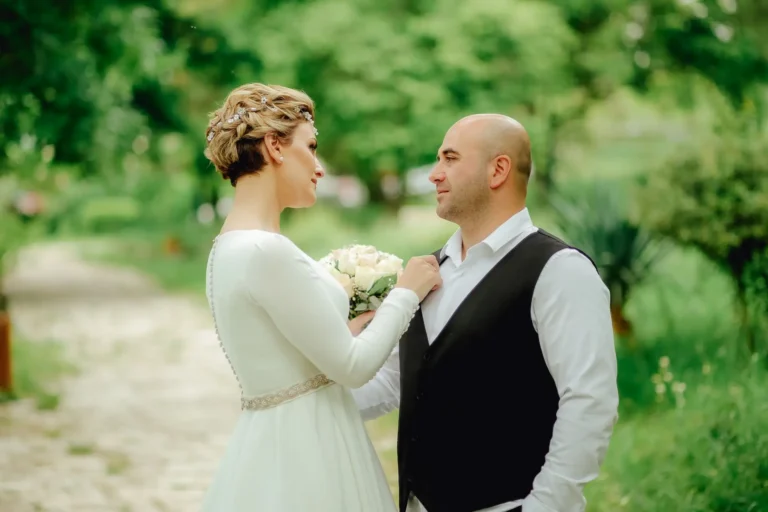
Wedding Season Stress: How to Protect Your Relationship When the Pressure Is On
You said yes. You found the venue. You picked the date. And somewhere between choosing centrepieces and managing the guest list, you…
Read article →
Couples Therapy: 6 Myths That Stop People from Getting Help
A lot of couples who could benefit from therapy don't go. Not because they don't care about the relationship, but because of…
Read article →
How to Support a Partner with Depression (Without Losing Yourself)
Loving someone who is depressed is one of the lonelier experiences you can have in a relationship. You're right there, sleeping in…
Read article →Where to see us in person, or meet online
Three offices across Vaughan and Barrie, plus secure video sessions anywhere in Ontario. Evenings and weekends available.
Three steps, starting today
Book your free consult
Online in 2 minutes or by phone. No referral, no credit card.
Meet your therapist
Talk it through and get matched with the right fit for you.
Start with a shared map
Leave knowing how you two handle money, family, conflict and change, before those arrive uninvited.