
Phobia therapy in Vaughan
Face it at your own pace.
When a specific fear starts shrinking your world, the things you avoid, the plans you turn down, you can face it and get your freedom back. We work in small, manageable steps, at your pace, in Vaughan and online across Ontario.
Is it your child or teen who’s afraid? Many fears first show up in childhood. Our child and youth therapy team works with ages 3 to 17, with gentle approaches matched to their age.
Takes 2 minutes. No credit card. No referral needed.
- 24+ Registered PsychotherapistsLook any of us up on the CRPO register
- Direct billing availableSun Life, Beneva, Green Shield
- Evenings and weekendsIn person or online



A fear that outgrew the danger.
A phobia is an intense fear of a specific thing or situation that’s much bigger than the actual risk. Your mind knows the spider, the flight, the needle or the elevator is unlikely to harm you, yet your body reacts as if your life is on the line. That mismatch isn’t a character flaw or a sign of weakness. It’s how fear works when it gets miscalibrated.
Phobias are common, and they respond well to therapy. The fear you feel is real, and so is the relief that can come from working through it gently. You don’t have to keep arranging your life around what you avoid.
Phobia therapy is practical, evidence-based talk therapy that helps you face a specific fear in gradual, manageable steps, so your nervous system can relearn that you’re safe and your choices open back up.
- Common and very treatable, you’re not alone in this
- Small, planned steps, never thrown in the deep end
- Judgment-free, in person or online across Ontario
What has your fear been costing you?
Tap anything that sounds familiar. None of these means something is wrong with you. Fears like these are common, and very workable.
Start with what you’re noticing.
Tap what sounds familiar lately, and we’ll suggest a sensible next step.
You’ve noticed 1 thing.
That’s common, and very workable. A free 20-minute consult is a calm way to talk it through, and nothing happens before you’re ready.
You’ve noticed 3 things.
That’s a lot to carry. You don’t have to keep arranging your life around it, and the first step can be as small as a conversation.
Putting off care because of fear is common, and very workable. We can start with the smallest step.
Book a free 20-minute consultThis isn’t a diagnosis.
Avoiding the fear feels safe, and that’s what keeps it going.
Avoiding the feared thing feels like the safe choice, but it’s exactly what keeps a phobia alive. Step through the loop, and how gentle exposure reverses it.
- 1In the moment
“My body floods with fear, even though part of me knows I’m safe.”
- 2What’s happeningThe alarm fires out of proportion to the risk.Your heart races and every instinct says get out. The fear is real, even when the danger isn’t as big as it feels.
- 3The shift
“I can notice the fear without obeying it straight away.”
- 1In the moment
“I just won’t go. That’s easier.”
- 2What’s happeningAvoiding brings instant relief.That relief is exactly what keeps the fear alive, because your brain never gets the chance to learn the situation could be okay.
- 3The shift
“The relief of avoiding is real, but it’s short, and it costs me more later.”
- 1In the moment
“It’s getting worse. Now I avoid even thinking about it.”
- 2What’s happeningEach escape teaches your brain the thing is more dangerous.The fear spreads to nearby situations, and your world gets a little smaller each time.
- 3The shift
“The fear grew because I kept running from it, not because I’m weak.”
- 1In the moment
“What does therapy actually do with all this?”
- 2What’s happeningGentle, gradual exposure reverses the loop.Together you build a ladder of small, planned steps, starting with the easiest, and you stay in control of the pace. Facing the fear this way helps your brain relearn that you’re safe. It’s the heart of evidence-based phobia therapy.
- 3The shift
“I didn’t have to jump in at the deep end. I just had to take the next small step.”
An illustration of a common pattern, not a real client’s words. Seeing the loop is where change starts, and it’s very workable.
Start with a therapist, free for 20 minutesMeet therapists who work with phobias
Every therapist below is a Registered Psychotherapist skilled in anxiety, fears and gentle exposure work. Watch a short intro, read their profile, or let us match you in your free consultation.
 Watch intro
Phil Azer
Registered PsychotherapistCRPO #10018Maple (Vaughan) · Online
Practical and calm, Phil helps clients face fears step by step.
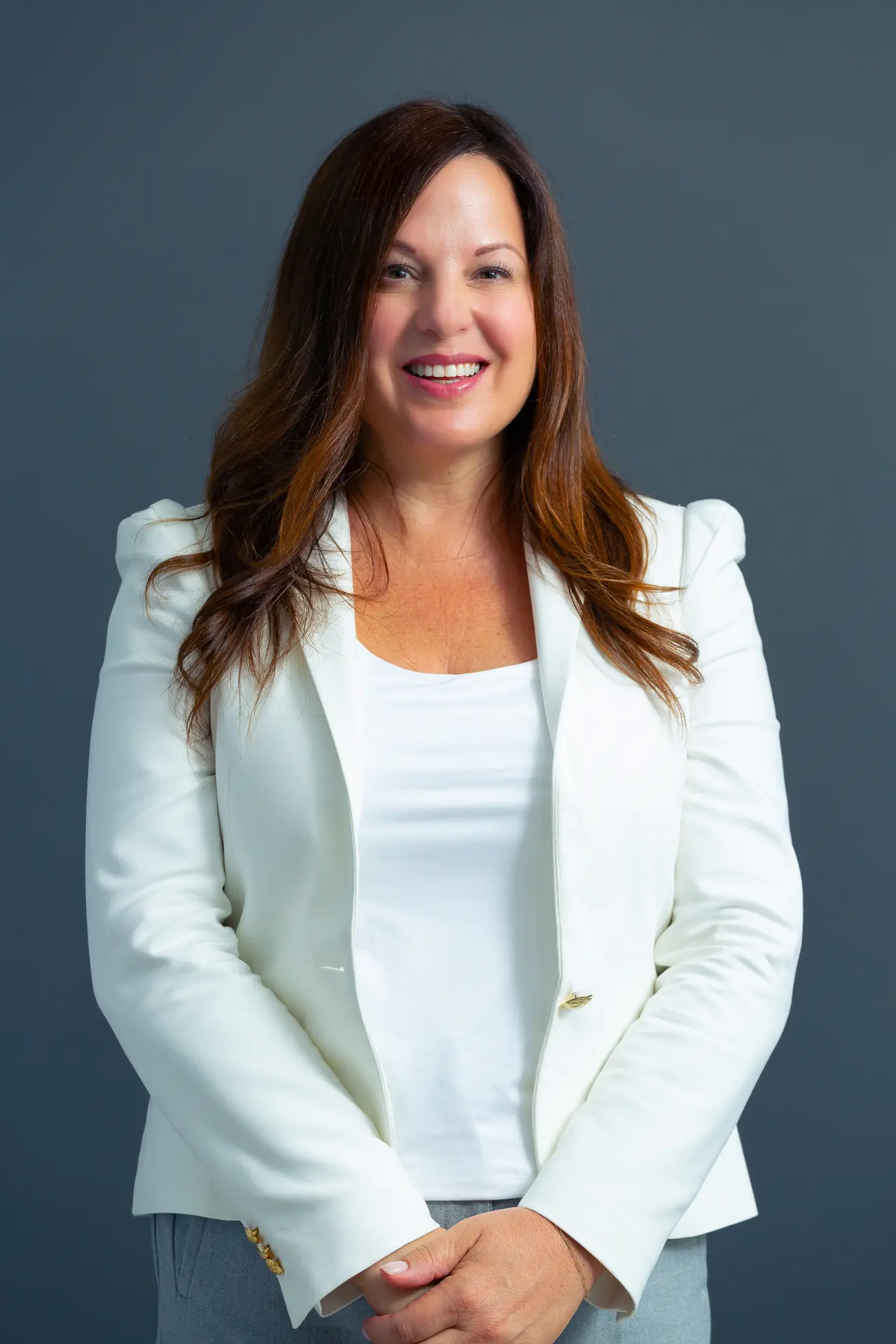 Watch intro
Teresa Di Panfilo
Registered PsychotherapistCRPO #19045Woodbridge · Online
CBT-focused, supportive and steady throughout the work.
Not sure who fits?
Let us match you in your free consultation. If the fit isn’t right, we’ll help you switch to another therapist on the team.
What your first session actually looks like
No one will push you into anything. We plan the steps together and move at your pace. Your first appointment is a 70-minute initial assessment, and here’s how that time tends to go.
- 1Minutes 0 to 15
Settling in
No judgment about the fear, no matter how big or unusual it feels. Your therapist welcomes you, explains confidentiality, and makes clear nothing happens before you’re ready.
- 2Minutes 15 to 60
Understanding the fear
Together you look at what triggers the fear, how it affects your daily life, and what you’d most like to get back.
- 3Throughout
Building your step ladder
You map out a gentle, gradual plan together, from the easiest first step up, plus a grounding skill to use along the way. You stay in control of the pace.
- 4The last 10 minutes
Leaving with a plan
You agree on a comfortable first step to notice or try before next week, and you decide together what that looks like.
When a phobia comes with panic or wider anxiety
A phobia can come with panic attacks or broader anxiety that feed each other. We work with the whole picture, not just the fear itself.
Anxiety therapyEvidence-based, gentle, and paced to you.
Phobia therapy pairs evidence-based exposure with steady support and skills for the moment. Sessions follow a clear, predictable structure: you and your therapist build a step-by-step plan together, and you always know what’s coming next.
Cognitive behavioural therapy
Understand and shift the thoughts that magnify the danger, the core of evidence-based phobia care.
More on CBTGradual, paced exposure
Facing the fear in small, planned steps so your brain relearns that you’re safe.
Relaxation and grounding skills
Calm the body and steady your nervous system, so each step feels more manageable.
Trauma-informed care
Where the fear began with a frightening event, we gently address the root, not just the symptom.
PTSD and trauma therapyInnerSight was founded by Svetlana Antonyshyn, RP, on the belief that healing should treat the person, not a label. More about our approach.
What the research says
We’ll always be honest about evidence. Exposure-based therapy for specific phobias is one of the better-studied areas in psychology, though how quickly things shift varies with the fear and the person.
Phobias are common: the Canadian Psychological Association says they affect almost one in every 10 Canadians.
A meta-analysis of 33 randomized studies found exposure-based treatment had large effects compared with no treatment, and did better than placebo and other talk therapies.
The Canadian Psychological Association notes that most people with a specific phobia can improve significantly in as few as one to five sessions of exposure-based CBT. Some fears take longer, and that’s okay.
In World Health Organization surveys across 22 countries, only 23% of people with a specific phobia in the past year had received any treatment. Most phobias began in childhood, at a median age of 8.
Our Registered Psychotherapists do not diagnose or prescribe. If a fear is getting between you and medical or dental care you need, we’re glad to work alongside your doctor or dentist.

Clinically reviewed by Svetlana Antonyshyn, Registered Psychotherapist (CRPO #001652). Last reviewed October 2026.
What phobia therapy costs
No hidden fees and no pressure. Most private insurance plans cover a portion of psychotherapy fees. We can bill Sun Life, Beneva (formerly SSQ) and Green Shield directly when your plan is with one of them, and we provide receipts for claims with other insurers.
- $0
- Free consultation · 20 minMeet a therapist, ask anything, and see if it feels right. No credit card and no obligation.
- $245
- First appointment · 70 minA longer first conversation to understand what’s going on and set goals together.
- $180
- Ongoing sessions · 55 minEvery session after your first, in person or online.
- $125
- Reduced-fee sessionWith select supervised therapists in training. Reduced-fee couples and family sessions are $175.
Appointments cancelled with less than 48 hours’ notice may be charged a cancellation fee. Sessions aren’t covered by OHIP, but psychotherapy from a Registered Psychotherapist may qualify as a medical expense at tax time. Worried about cost? See our reduced-fee program, or call us. We’re happy to walk you through it.
How far could your benefits go?
Pick your plan’s yearly maximum for a Registered Psychotherapist.
An estimate, not a quote or a promise of coverage. Plans differ on the percentage reimbursed, per-visit limits, deductibles and which providers they recognize, so check your benefits booklet or ask your insurer about “Registered Psychotherapist” and “Registered Psychotherapist (Qualifying).”
Book a free 20-minute consultDon’t take our word for it. Check.
Anyone can say they’re good at this. Here’s what you can verify about us in about two minutes, without speaking to anyone.

Regulated, not self-declared
“Psychotherapist” is a protected title in Ontario. Our team are Registered Psychotherapists, accountable to a College with a public complaints process.
See every therapist’s registrationSupervised every month
Our therapists meet for clinical supervision every month, so the work stays accountable to someone other than the person doing it.
How we workWe show our sources
Where we describe what therapy can help with, we name the source and link it, from Statistics Canada and CAMH to peer-reviewed trials.
What we help withNothing locks you in
No referral needed. No contract, no package to buy. Fees are published up front, $180 for a 55-minute session. If the fit isn’t right, tell us and we’ll help you switch to another therapist on the team.
Fees and coveragePhobia therapy: your questions, answered
Still wondering about something? Ask us in a free consult, or call (905) 553-9507. Phones are answered weekdays 9 am to 5 pm, Saturdays 9 am to 2 pm.
Can a phobia really be treated?
Yes. Phobia therapy uses gradual, evidence-based exposure that helps your brain relearn that you are safe, step by step. Many people are surprised by how much can shift.
Do I need a referral for phobia therapy in Vaughan?
No referral is needed. You can book a free 20-minute consultation online at psychotherapyclinic.janeapp.com or call (905) 553-9507. Most people have their first full session within a week.
Will you force me to face my fear right away?
Never. No one will push you into anything. You and your therapist plan small steps together and go entirely at your pace, building confidence one manageable move at a time.
How long does phobia therapy take?
Often shorter than people expect. Many clients see real progress within a number of focused sessions, though it varies with the fear and how long it has been in place. You and your therapist review the pace together.
What if my phobia started with a frightening event?
When a fear began with a frightening or traumatic event, we use trauma-informed care to gently address the root, not just the symptom, at a pace where you feel safe doing it.
Is phobia therapy available online across Ontario?
Yes. We offer secure video sessions anywhere in Ontario, plus in-person sessions in Vaughan, Woodbridge and Barrie. Many people find online sessions a comfortable, low-pressure way to begin.
How much does it cost and is it covered?
The first 20-minute consultation is free. Individual sessions are $180 for 55 minutes. There is no OHIP coverage, but most private insurance plans cover a portion of services from a Registered Psychotherapist. We bill Sun Life, Beneva (formerly SSQ) and Green Shield directly, and reduced-fee options are available.
What happens in the first session?
We get to know your fear, how it affects your daily life, and what you would like to get back. Together you and your therapist map out gentle first steps, with no pressure to do anything you are not ready for.
How is phobia therapy different from gradually exposing myself to my fear on my own?
Self-directed exposure can help some people, but it is easy to move too fast, avoid the hardest step, or accidentally reinforce the fear if an attempt goes badly. In therapy, you build a paced, planned hierarchy with a Registered Psychotherapist who helps you stay at a manageable level, teaches grounding skills for the moment, and adjusts the plan as you go. It tends to be steadier and more likely to stick.
Is it a fear or a phobia?
Fear of something genuinely risky, like standing near a cliff edge, is a normal, protective response. A phobia is a fear that is out of proportion to any real danger and that starts to limit your life: avoiding flights, medical care, or entire activities because of it. A Registered Psychotherapist cannot formally diagnose a phobia, but if it is affecting your daily life, that is a sign therapy could help.
Phobia therapy near you
In-person sessions in Woodbridge, Maple and Barrie, plus secure video sessions anywhere in Ontario. Evenings and weekends available.
Online across Ontario
Secure video sessions from anywhere in the province, a comfortable way to begin.
Book an online consultAppointment hoursMonday to Friday, 9:30 am to 8:00 pmSaturday, 9:30 am to 5:30 pm
Recent thinking on phobias and anxiety

It’s Not Shyness: What Social Anxiety Actually Feels Like
There’s a specific kind of tired that follows a work event. You went, you smiled, you managed. Then you sat in your…
Read article →
Summer Burnout Is Real: Why Chasing the Perfect Summer Is Exhausting You
Somewhere around mid-July, a strange kind of tiredness sets in. Not the satisfying tiredness of a day at the beach. The other…
Read article →
How to Support Someone You Love Who's Struggling with Their Mental Health
You can see that something is wrong. Your partner has been withdrawing. Your adult child doesn't sound like themselves on the phone.…
Read article →Your world can get bigger again.
Phobias are very treatable with the right support, and the first step is a free, no-pressure conversation. You can take it today, entirely at your pace.
Phones answered Monday to Friday 9 am to 5 pm, Saturday 9 am to 2 pm.